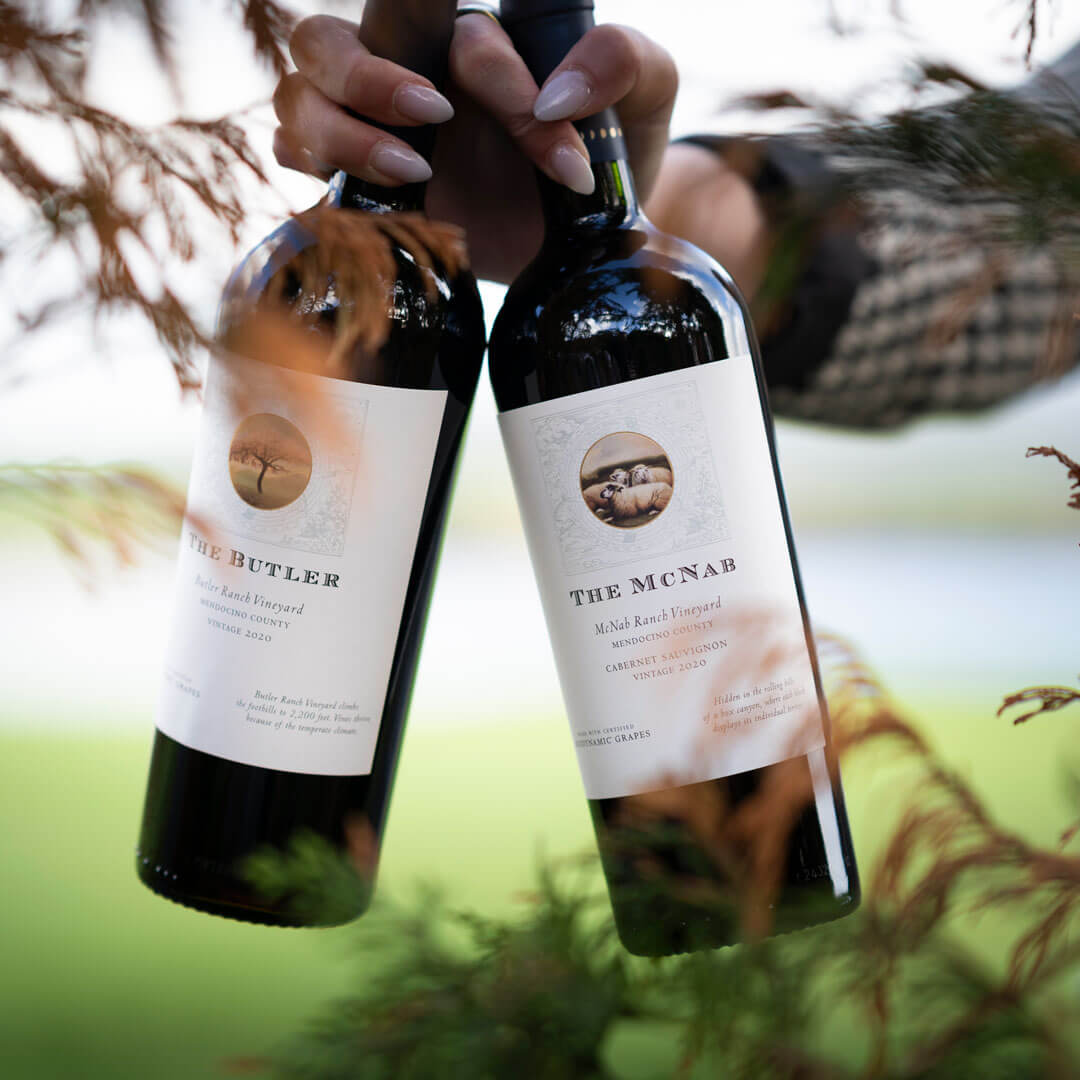
Organic wine starts with what happens in the vineyard: how the soil is tended, how the vines are cared for and how the grapes are organically grown. The label captures part of that story. A closer look reveals the choices behind the bottle and why they matter in your glass.
At Bonterra, organic grapes are the starting point for our wines. That means the farming comes first: soil health, thriving vineyards and careful choices made long before you pick up a bottle of our wine. Here is our guide to organic wine: what it means, how Bonterra approaches it and why the difference starts in the vineyard.
What Is Organically Farmed Wine and What Does That Label Actually Mean?
The practical organic wine meaning comes down to two questions: how were the grapes farmed, and what was added in the cellar? In the United States, “organic wine” and “made with organic grapes” are distinct regulated categories, even though both begin with certified organic fruit.
- Organic wine must be made from certified organic grapes and may not contain added sulfites or non-organic additions. Wine naturally produces a small amount of sulfites during fermentation, so “no added sulfites” is the accurate distinction.
- Wine made with organic grapes must also use certified organic grapes and not contain any non-organic additions. Winemakers may add a limited amount of sulfur dioxide to protect the wine’s freshness, quality and consistency.
Bonterra uses a small amount of sulfur in crafting our wines. That is why our labels say “made with organic grapes” rather than “organic wine.” It is a precise description of what is in the bottle, not a step away from our commitment to organic farming.
So, what makes wine organic in the first place? It begins with grapes grown without synthetic pesticides or herbicides using practices designed to work with the vineyard ecosystem. Independent certification adds accountability to the process, ensuring both vineyards and winery facilities meet all USDA organic standards.
How Bonterra Became a Pioneer of Organic Farming in California
Bonterra began farming organically in Mendocino County in 1987, long before “organic” became a familiar part of the wine aisle. The decision was rooted in a simple conviction: stewarding the vineyard as a dynamic, living ecosystem would create the conditions for vines to thrive and produce great wine.
Nearly four decades later, that early commitment still shapes every vintage. Today, Bonterra farms ten estate vineyards in Mendocino County and works with certified organic farm partners throughout California, extending that farming standard across the collection. Organic farming is not a limited release or a seasonal initiative here. It is the foundation of every Bonterra wine in our core collection, each made with 100% certified organic grapes.
What Organic Farming Actually Looks Like in the Vineyard
Organic farming is often defined by what it leaves out: synthetic pesticides, fertilizers, and GMOs. Our approach to organic farming also incorporates various regenerative practices to build healthy soil, nurture biodiversity, and produce wines that reflect the character of the land we tend.
At Bonterra, that work can include:
- Planting cover crops between vine rows to help protect the soil, support beneficial insects, and boost soil organic matter.
- Applying compost to provide nutrients and encourage a healthy soil ecosystem. Our farming program utilizes composted grape pomace from our winery (the skins and seeds left after pressing), creating a circular solution with direct ties to the winemaking process.
- Bringing in sheep to seasonally graze down cover crops, managing growth to create optimal conditions for the vines, while leaving behind nutrient-rich manure as they go.
- Recycling grape pomace, the skins and seeds left after pressing, by composting it and returning it to the vineyard.
These practices are essential to our organic farming program. Implemented together, they help build resilient soils and support vines through changing conditions. Farming this way doesn’t necessarily produce a specific tasting note, but it can support balanced vines, resulting in delicious fruit that arrives at the winery with its character intact.
Celebrating Organic Month in Mendocino
September marks both the peak of harvest in Mendocino County and Organic Month nationwide, which makes it a fitting time to look more closely at the place Bonterra calls home. Mendocino has earned a reputation as “California’s greenest AVA,” with a significant amount of its vineyard acreage certified organic.
Here, organic agriculture is not a fringe movement: it’s central to the winegrowing culture of Mendocino. It is part of the landscape, the local knowledge and the rhythm of the season. As bins fill with just-picked grapes, the work that began in the soil becomes visible in the most delicious way.
When Your Neighbors Are the Farmers
At Bonterra’s estate vineyards in Mendocino, vineyard life is personal. Bonterra’s own vineyard teams work alongside longtime local partners and neighboring farm families whose knowledge of the land has been built season after season.
That proximity creates a shared set of values. Organic practices are discussed among colleagues and across fence lines, refined through experience and carried forward by a community invested in the health of the region. The bottle on your table begins with that network of hands, relationships and local expertise.
“Here in Mendocino, surrounded by Redwoods, rolling hills, and a rugged coastline, many growers share a sense of responsibility for the incredible landscape we inhabit,” shared Beatrix Scolari, sustainability manager for Bonterra. “That ethic of stewardship shapes how we farm and the wines we produce.”
What Bonterra Believes About Organic Farming and Flavor
Can you taste organic farming? There is no single “organic” flavor, and certification does not promise a particular aroma or tasting note. Bonterra’s belief is more grounded: thoughtful farming supports healthy vines and high-quality fruit, giving our winemakers a clear, expressive starting point.
That is where the farming meets the glass. Sauvignon Blanc can keep its bright citrus lift. Chardonnay can show ripe orchard fruit and balanced acidity. Cabernet Sauvignon can bring dark fruit, structure and savory detail. The goal is to let the fruit speak with clarity.
Scolari expanded on this approach, noting that “our goal as organic producers is to create a healthy vineyard ecosystem where vines can thrive. Since we can’t control the weather, we focus on the soil: cultivating healthy, biologically active soil is a great strategy for supporting vine balance and even ripening, which is the foundation for fresh, flavorful wines.”
Why Bonterra Is America’s #1 Organic Winery and What That Means for You
Being America’s #1 organic winery is not only a measure of scale. It is proof that organically farmed wine can be both widely available and genuinely delicious. Bonterra pairs nearly four decades of organic farming with additional third-party commitments, including Certified B Corporation standards and TRUE Zero Waste certification at our winery.
For you, the payoff is refreshingly uncomplicated: a broad collection of wines made with certified organic grapes, ready for the meals and moments already on your calendar.
- Chardonnay brings pear, green apple and citrus with balanced acidity and a subtle touch of toast.
- Cabernet Sauvignon layers dark cherry and blackberry with savory notes and polished structure.
- Rosé keeps things bright with watermelon, grapefruit, blood orange and lively acidity.
Different bottles, same starting point: organically farmed grapes and a belief that better care for the land belongs in everyday wine.
Raise a Glass to Good Earth, Your Next Bottle Starts Here
What is organic wine? At Bonterra, organic wine is made through deliberate choices that begin in Mendocino soil and continue in the vineyard and cellars. It means certified organic grapes, transparent labeling and farming practices designed to care for the land that makes the wine possible.
It also means there is plenty to explore. From a crisp white wine to a generous red wine or a bright bottle of Rosé, shop Bonterra’s organically farmed wines and find the one that belongs in your next glass.
Citations
- Alcohol and Tobacco Tax and Trade Bureau. “Wine Labeling: Organic Wine.”
- Bonterra Organic Estates. “What Does It Mean to Be TRUE Zero Waste?”
- Wine Enthusiast. “2024 Wine Star Awards: American Wine Region of the Year: Mendocino.” 2024.